• Home
  • About Us
    • Mission
    • Contact Us
    • Living With Spirit
    • Submit A Birthday
    • Request A Magnet
    • Shows & Programming
    • Spirit FM Features
    • Coverage Map
    • Employment Opportunities
    • Public Inspection File
    • EEO
  • Support
  • Concerts & Events
  • Music & Media
    • What's Been Playing
    • HD Radio
    • The My Spirit FM App
    • Let's Connect!
  • Faith
    • Request Prayer
    • Thought For The Day
    • Our Catholic Faith
    • Diocese of Saint Petersburg
  • Listen Live
  • Give Now

Catholic News

80-year-old Bishop Juan Abelardo Mata has been missing for 19 days.

Researcher Martha Patricia Molina denounced the forced disappearance of Bishop Abelardo Mata in Nicaragua, carried out by the dictatorship of President Daniel Ortega and his wife and co-president, Rosario Murillo, as a "crime against humanity."

"The forced disappearance of Bishop Juan Abelardo Mata is a serious matter; this constitutes a crime against humanity committed by agents of the Ortega-Murillo dictatorship. He has been missing for 19 days, and the co-dictators have not made any further statements on the matter," Molina told ACI Prensa, the Spanish-language sister service of EWTN News, on July 18.

"It's the dictatorship's practice to inflict the greatest possible harm on priests," the researcher warned.

"No one in his circle has any news of him, and concern among the laity and the Catholic Church in general is even greater due to the medical conditions he suffers from, conditions that are almost certainly not being treated properly."

Mata, bishop emeritus of Estelí, Nicaragua, was detained by police on two occasions in late June after praying for the persecuted Church in Nicaragua during a Mass he celebrated on Sunday, June 28.

His whereabouts are unknown, although the dictatorship has stated that he is at home.

The bishops of Central America have called on the regime to allow him to be seen by a doctor, and other notable individuals have expressed concern for the 80-year-old bishop, who suffers from diabetes and vision problems and uses a pacemaker for a heart condition.

Extreme concern over Mata's disappearance

"Family members, priests, human rights organizations, and the international community including the U.S. State Department and the bishops of Central America, are demanding immediate proof that Bishop Abelardo Mata is alive and a clear response from the regime of Daniel Ortega and Rosario Murillo," Father Edwing Román, parochial vicar of St. Agatha Parish in Miami, Florida, told ACI Prensa on July 18.

"So far, there has been only official silence and contradictions in an irrelevant statement. We fear for his life; he cannot be yet another victim of a dictatorship that has wreaked havoc on the Nicaraguan people," Román, who has been living in exile for several years.

On July 4, the Nicaraguan government, through the Ministry of the Interior, issued a statement indicating that Mata had been subjected to a "necessary inquiry regarding the origin of properties and family ties inconsistent with his status as a priest" and that, following this, he "has returned to his home, where he remains in perfect condition." The text does not specify which properties or ties are being referred to.

Another exiled Nicaraguan priest, who prefers to remain anonymous to avoid reprisals from the regime, told ACI Prensa on July 18 "It is unknown why the dictatorship is so intent on targeting an 80-year-old man. What are they afraid of?"

"Hopefully, the Holy Father will speak up and ask the Nicaraguan government to show signs that he is well, alive, and at peace; that his relatives can visit him without any worry; and that he is in good health and well cared for. That's what we hope for," he added.

The Church's 'last courageous voice' in Nicaragua

"Bishop Mata is the last courageous voice of the Church remaining in Nicaragua and that is unafraid of the regime," Arturo McFields, Nicaragua's former ambassador to the Organization of American States (OAS), told ACI Prensa on July 18.

"They fear him because he doesn't fear them. He is an 80-year-old man of God who is not afraid of a cowardly regime and is prepared to face the ultimate consequences," he added.

"What's important now is to call for his freedom and protect him in some way not only through the Catholic Church but also by engaging other governments, such as that of the United States, one of the voices the dictatorship fears," McFields emphasized.

Who is Bishop Juan Abelardo Mata?

The prelate is the bishop emeritus of Estelí, Nicaragua, a diocese he led for over 30 years, from 1990 to 2021, when Pope Francis accepted his resignation upon his reaching the age of 75, the retirement age for bishops.

Mata, who recently turned 80, was born on June 23, 1946. He made his profession as a Salesian in 1966 and was ordained a priest in 1976. In 1988, he was appointed auxiliary bishop of Managua, a position he held until his appointment as bishop of Estelí.

Various notable Nicaraguans agree that Mata is a courageous, beloved, and credible voice in Nicaragua, which is why the dictatorship has it out for him.

A staunch defender of human rights

"Bishop Mata has always been a staunch defender of human rights, both as a priest and a pastor. He has always been active in the country's public life not only through his interventions and statements but also through his practice of charity and social commitment," another exiled Nicaraguan priest, who asked to remain anonymous to avoid reprisals, told ACI Prensa on July 18.

This "gives him the moral authority to shed light on the country's political and social life through his statements. And for a long time, he was a big critic of the government" though he subsequently kept a low profile following his resignation in 2021, only to return to the public stage recently.

"Offering a prayer in Nicaragua for those who have left the country is an act that offends the government and is punishable by imprisonment. Every priest in the country knows this; the bishop knew it too, and he knew it could have consequences," the priest added.

'Nicaragua is a prison for priests'

"No one is safe there. Nicaragua is a prison for priests. They have certain freedoms, but they cannot freely exercise their ministry," the priest warned.

"Any priest in the country, even those who believe they are very close to the dictatorship, could be detained at any moment. Anyone in Nicaragua," he stated, "can be subjected to violence."

This story was first published by ACI Prensa, the Spanish-language sister service of EWTN News. It has been translated and adapted by EWTN News English.

Full Article

In a joint statement, Bishops Daniel García and Brendan Cahill called for the application of immigration law in a humane manner and with respect for fundamental human rights.

U.S. Bishops Daniel E. García and Brendan J. Cahill lamented the deaths of migrants that occurred during recent immigration enforcement operations and called for "accountability, transparency, and justice."

García, chair of the Subcommittee on the Promotion of Racial Justice and Reconciliation of the U.S. Conference of Catholic Bishops (USCCB), and Cahill, chair of the Committee on Migration, issued a pastoral reflection following "several recent immigration enforcement encounters resulting in the loss of life."

In Houston on July 7, a U.S. Immigration and Customs Enforcement (ICE) agent shot and killed Mexican national Lorenzo Salgado Araújo during an operation. On July 13, Colombian national Johan Sebastián Durán Guerrero died after being shot by a federal agent in Maine.

In both cases, the U.S. government maintains that the agents acted in self-defense.

In their joint reflection, the prelates said that Catholics "grieve all situations where human life is brought to an unnatural end."

"This is a core teaching of our faith and one we can never grow weary of proclaiming as disciples of Our Lord Jesus Christ," they noted.

The bishops recalled the statement issued by the USCCB in November 2025, in which the American bishops expressed concern regarding the "climate of fear and anxiety" they observed among the population "around questions of profiling and immigration enforcement."

"Racial profiling in particular not only violates God-given dignity but also inflicts profound harm on individuals, families, and communities by fostering fear, eroding trust, and increasing the risk of unjust and even tragic outcomes. Our pastoral concerns are distinct from what the civil law itself may permit," the two bishops stated.

Likewise, they warned that "acts that diminish or disregard the dignity of any person or group of people should never be normalized in our society."

"The dehumanization of immigrants, regardless of their legal status, is one such example of this; the vilification of law enforcement officers is yet another," they noted.

The bishops recalled that the authorities must "apply the law in a humane manner and with respect for fundamental human rights," exercising state power "always within the limits of the moral law."

"To that end, we call for accountability, transparency, and justice, which require that meaningful reforms be made to our immigration system," they stated in their pastoral reflection.

"We join in praying for the souls of those killed and for their families," they declared, "for our nation, and for all those entrusted with the duties of public service. We pray for an end to dehumanizing rhetoric, racial prejudice, and violence and for a renewed commitment to recognizing the inherent dignity of every person as a child of God."

On June 25, the Human Rights Watch organization published a 73-page report in which it charged that, so far during President Donald Trump's administration, "52 people have died in Immigration and Customs Enforcement (ICE) custody in the United States." The document lists among the causes "poor detention conditions and lack of adequate medical care."

Added to these is the death on July 13 of 45-year-old Venezuelan Jesús Manuel Arias-Silva. According to the ICE statement, the migrant was detained on Thursday, July 9 and died "while being transferred between detention facilities in Georgia."

This story was first published by ACI Prensa, the Spanish-language sister service of EWTN News. It has been translated and adapted by EWTN News English.
Full Article

The bishop said "we will never submit" to "the culture of death" as the Catholic diocese and religious sisters argue that their faith prevents them from participating in physician-assisted suicide.

Bishop John O. Barres of the Diocese of Rockville Centre and four communities of religious sisters have filed a lawsuit against New York's attorney general and commissioner of health over a law they say would force them to participate in the process of physician-assisted suicide.

The Diocese of Rockville Centre, New York, and the religious communities — the Carmelite Sisters for the Aged and Infirm, the Dominican Sisters of Hawthorne, the Missionary Sisters of St. Benedict, and the Little Sisters of the Poor — provide care for elderly and terminally ill people and say their Catholic faith prohibits them from participation in the process in any way.

Democratic New York Gov. Kathy Hochul signed a bill legalizing physician-assisted suicide in February, and the law goes into effect in August. Although some facilities can opt out of parts of the physician-assisted suicide process, the exemptions are limited, and the law imposes additional requirements on the diocese and religious communities.

"We will never submit to New York's culture of death," Barres said in a statement through his attorneys at the Becket Fund.

"Assisted suicide is a grave moral failure that puts the elderly, the disabled, and those suffering from mental and emotional illness at risk of abuse and manipulation," the bishop said. "Christ the Divine Physician calls us to accompany the sick and dying with compassion, not abandon them to death. The court should protect that millennia-old mission."

The New York's attorney general's office and Department of Health did not immediately reply to a request for comment.

Requirements in the law

More than a dozen states have legalized physician-assisted suicide over the past two decades, but New York's opt out policy "is among the narrowest in the nation," according to the lawsuit, and it affects some of the religious communities differently.

While most of the Catholic-run facilities qualify for the narrow "opt outs," those that qualify must still follow existing laws to offer counseling to terminally ill patients that explains various options for end-of-life care, along with the "risks and benefits" of their options, or refer them to someone who will.

According to the lawsuit, this will now apply to the "option" of physician-assisted suicide, which means nurse practitioners or physicians "must either counsel terminal patients about the availability and benefits of [physician-assisted suicide], or else help the patient find a provider who is willing do so."

Physicians covered by the opt outs must also assist in determining whether patients qualify for assisted suicide through actions such as referring them for mental health evaluations. Facilities covered by the opt outs — if they refuse to directly participate in the suicide itself — must refer the patient to a facility that will administer it, according to the lawsuit.

The lawsuit further states that providers must sign a death certificate that says the patient died from his or her underlying condition, rather than the drugs that ended his or her life. It states that facilities may also not be able to take adverse employment actions against employees who act in accordance with New York's physician-assisted suicide law, even if the facility prohibits it.

At least one facility — the Missionary Sisters of St. Benedict — is not covered by the opt outs, which means it must also allow the prescription and the ingestion of the suicide drugs on its property. Those that qualify for the opt out are exempted from this requirement.

Adele Keim, senior counsel at Becket, told EWTN News the law essentially requires all the facilities to "take [the patients] through the process" and "allow that very involved process to take place in their facilities."

"[They] will not do that," she said, explaining that it violates their religious beliefs.

First Amendment objections

Keim said Catholic sisters have offered end-of-life care to New Yorkers for more than 100 years, "providing that personal accompaniment, which in Catholic teaching, is rooted in the example of Mary sitting at the foot of the cross as Jesus died."

"That's what they believe they're called to do," she said. "... [They are] bearing witness to the distinctly Catholic response to the suffering people experience in their final days."

Sister Justyna Owsiejko, O.S.B., of the Missionary Sisters of St. Benedict, said in a statement through Becket that "we are simple nuns whose mission is to serve God — and we do that by offering the aged a home in which to live their final days in peace, tranquility, and comfort, cared for by sisters who see the face of Christ in each person they serve."

"New York is trying to force us to abandon that vocation and help our residents commit suicide," she said. "That is something we will never do. Our foundress overcame war and exile to serve those in need — we will overcome this law to do the same."

Mother Alice Marie Monica of the Little Sisters of the Poor said in a statement that "we have served God by welcoming the elderly poor and dying into our homes for nearly 200 years."

"Our calling is to protect and care for needy seniors, not steer them toward suicide," she said. "We will remain true to that mission, whatever the cost."

The lawsuit argues that forcing Catholic-run facilities to participate in physician-assisted suicide violates their First Amendment right to the free exercise of religion. The Church teaches that life must be protected from conception until natural death.

The suit also argues that the law violates their freedom of speech by compelling them to counsel their patients about physician-assisted suicide.

"The sisters' Catholic faith leads them to accept death as the natural end to a life well-lived: neither artificially prolonging it through burdensome technological and medical interventions that provide no reasonable benefit, nor artificially hastening it," the lawsuit states.

"Above all," the lawsuit adds, "it means that the sisters seek to personally provide a loving human presence alongside each person — bearing witness to the ending of a uniquely beautiful and unrepeatable life."

Full Article

The decision was announced at the 21st Plenary Assembly of the Association of Member Episcopal Conferences in Eastern Africa.

NAIROBI — The Catholic bishops of Eastern Africa have committed the next four years of their regional pastoral mission to accompanying young people, making them their top pastoral priority as they seek to strengthen the Church through listening, dialogue, and synodal accompaniment in one of the world's youngest regions.

Announcing the decision during the opening Eucharistic celebration of the 21st Plenary Assembly of the Association of Member Episcopal Conferences in Eastern Africa (AMECEA) on July 19, Bishop Charles Sampa Kasonde said the bishops had intentionally adopted this pastoral focus because young people are central to the future of both the Church and society.

"We, the bishops of the AMECEA region, make young people our pastoral priority over the next four years for three reasons,"  Kasonde, the AMECEA chairman, said during the Eucharistic celebration at the Catholic University of Eastern Africa (CUEA) in Kenya's Archdiocese of Nairobi (ADN).

Kasonde, who is also bishop of Zambia's Catholic Diocese of Solwezi said the first objective of the four-year pastoral commitment is to strengthen young people's sense of belonging to the Church.

He explained that the bishops' commitment seeks to affirm "that it is worth the effort of young people to have a sense of belonging to this Holy Mother Church, the Catholic Church, for the future of humanity and indeed the future of the Church."

He added: "The future of the Church lies in the hands of those who are strong enough to give the coming generations reasons for living and hoping in faith."

Kasonde said the bishops' decision is also informed by Africa's demographic reality, recalling the reflections of Catholic bishops in Africa during the Golden Jubilee of the Symposium of Episcopal Conferences of Africa and Madagascar (SECAM).

"Our continental bishops heard the plain fact that six in 10 Africans are under 25 years of age. This reality calls for a preferential option for the youth," he said.

Reflecting on the theme of the July 19–26 Plenary Assembly, "AMECEA's Synodal Journey with Young People: Building Bridges of Communion, Hope, Justice, and Good Governance," Kasonde said the Church's mission among young people must be rooted in listening and accompaniment.

"The Synod on Synodality has taught us that the Church discerns God's will by listening," he said.

Referring to Pope Leo XIV, who sent a message to the plenary asembly encouraging the Church to trust young people "to be agents of transformation," the AMECEA chairman said new technologies can also contribute to fostering dialogue despite growing social fragmentation.

"Pope Leo XIV even spoke about making use of the Internet and new technologies to enhance dialogue amid the many interests that fragment our relationships," he said.

He underscored that listening and accompaniment are inseparable dimensions of the Church's synodal mission.

"Synodality without accompaniment is a theory. Accompaniment without listening is control. This theme holds both together, journeying with our young people, not merely speaking about them," Kasonde said.

Addressing the young delegates participating in the 21st AMECEA Plenary Assembly, he acknowledged that although only a limited number were present, they represented thousands of young Catholics across the region.

"You are few in this hall, but you are not few in God's eyes or in this assembly. You stand here to represent thousands of young Catholics across the 11 countries in Eastern Africa who could not travel to Kenya, but whose hopes you carry. Your bishops are seeing you and listening to you," he said.

Encouraging them to embrace their vocation in the Church and society, the AMECEA chairman cited St. Paul's exhortation to Timothy: "Let no one despise you for your youth, but set the believers an example in speech, conduct, love, faith, and purity."

Reflecting on AMECEA's 65-year journey, Bishop Kasonde described the regional association as the realization of a vision of ecclesial collaboration that continues to unite the Church across national borders.

"Sixty-five years ago, the bishops of Eastern Africa dared to imagine a Church working together across our borders and cultures. Today, here in Kenya, we are the fruit of that dream. For 65 years of growth in faith, in numbers, and in holiness across our member episcopal conferences, God alone be praised," he said.

He also thanked Pope Leo XIV for his spiritual closeness to the AMECEA Plenary Assembly through his representative, Vatican Secretary of State Pietro Cardinal Parolin, and expressed gratitude to the Catholic Church in Kenya for accepting to host the gathering on short notice.

Turning to the challenges that the region faces, Kasonde said the AMECEA Plenary Assembly could not overlook the suffering caused by conflict, displacement, and violence.

"Our hearts cannot ignore the wounds of our region and our world — conflict, displacement, families torn by violence," he said.

Entrusting the region to the intercession of the Blessed Virgin Mary, he prayed that the gathering would contribute to peace in Eastern Africa.

"Through Mary, Queen of Peace, we ask God for peace in every troubled corner of Eastern Africa and that this Plenary itself become an instrument of that peace," he said during the opening Holy Mass of the 21st AMECEA Plenary Assembly on July 19.

On his part, welcoming participants in the Plenary Assembly to Kenya, the Chairman of the Kenya Conference of Catholic Bishops (KCCB), Archbishop Maurice Muhatia Makumba, reaffirmed the Church's confidence in young people and encouraged them to play an active role in the life of the Church and society.

"The Church loves you, and we invite you to participate fully in the life of the Church and the life of your respective countries, that we may grow together in love, in justice, in unity, in faith, and in moving our society forward based on our Catholic and Christian values," the archbishop said.

The host of the 21st AMECEA Plenary Assembly, Archbishop Philip Subira Anyolo of the Catholic Archdiocese of Nairobi (ADN) described the gathering as "a great blessing and an honour" and invited participants to model their synodal journey on the disciples' encounter with the risen Christ on the road to Emmaus.

"May we find Him within us. May we feel our hearts burning as we listen to him. Above all, may we continually discover Jesus as the disciples of Emmaus did at the breaking of bread," Anyolo said.

He encouraged young people to remain steadfast in faith despite contemporary challenges.

"Do not be afraid to live your faith to the full. Allow the Holy Spirit to inspire you and guide you to joyful and courageous witness," he said.

AMECEA is comprised of the Episcopal Conferences of Eritrea, Ethiopia, Kenya, Malawi, South Sudan, Sudan, Tanzania, Uganda, and Zambia — with Djibouti and Somalia participating as affiliate members.

During the week-long Assembly, bishops and delegates are examining key pastoral and social issues affecting young people, including governance, unemployment, migration, social exclusion, safeguarding, mental health, evangelization in the digital age, and missionary vocations.

The plenary will also review the implementation of previous resolutions, consider reports from the AMECEA Secretariat and its institutions, deliberate on revised statutes, approve its final resolutions and communiqué, and elect a new AMECEA Chairman.

The assembly is scheduled to conclude on Sunday, July 26, with a closing Eucharistic celebration to be presided over by the new AMECEA chairman, who will be elected during the ongoing plenary assembly.

The current chairman of AMECEA, Bishop Kasonde, was re-elected during the July 2022 20th Plenary Assembly of the nine-nation eight-conference association that was held in the Catholic Archdiocese of Dar es Salaam, in Tanzania.

This article was orginally published by ACI Africa, EWTN News' service in Africa, and has been adapted by EWTN News English.

Full Article

U.S. bishops released resources including posters, homily notes, social media files, and ideas for celebrating and promoting natural family planning.

"Designed by God, Guided by Love, Open to Life" is the theme of the United States Conference of Catholic Bishops' (USCCB) 2026 Natural Family Planning (NFP) Awareness Week campaign.

The bishops' annual NFP campaign, taking place July 19-25, highlights God's design for married love, the gift of life, and the Church's teaching on NFP methods.

To educate people on the matter, the NFP Program of the USCCB develops a poster each year with supportive materials to be displayed in parishes, hospitals, NFP classrooms, marriage preparation sites, doctors' offices, family life centers, and campus ministry centers.

In 1981, the Catholic Church in the U.S. worked to strengthen efforts to make NFP and Church teaching more widely known and used. To further the mission, the bishops' conference established the NFP Program.

The program, which is a part of the USCCB's Secretariat for Laity, Marriage, Family Life, and Youth, releases resources for dioceses and organizations to use including the posters, homily notes, social media files, and ideas for celebrating and promoting NFP.

The campaign encourages parishes to provide introductory sessions on the science and ethics of NFP and host retreats for married couples.

The USCCB also suggests that parishes offer opportunities for prayer, including Masses, rosaries, Eucharistic adoration for marriage and NFP intentions, and novenas for strengthening marriage, such as those to St. Anne, St. Joachim, and the Blessed Mother under the title of the Annunciation.

The dates of the annual campaign highlight the anniversary of Pope Paul VI's encyclical on the regulation of birth, Humanae Vitae, which was published on July 25, 1968.

Natural Family Planning

NFP invites couples to cooperate with God's plan for married love, which the USCCB says, "is a 'great mystery,' a sign of the love between Christ and his Church (Eph 5:32)."

NFP relies on observing and measuring a woman's natural signs of fertility, such as basal body temperature and hormone levels, in order to identify fertile and infertile phases of her menstrual cycle.

Unlike chemical or mechanical contraceptives that suppress or block fertility, NFP works with the body's natural rhythms in keeping with Church teaching.

As the U.S. bishops have previously said, "NFP respects the God-given power to love a new human life into being even when we are not actively seeking to exercise that power."

Published research has also revealed that married couples who practice a method of NFP experience improved couple communication, more openness to life, and have lower divorce rates.

Full Article

"Children are the most rewarding thing," Vance said in an interview earlier this year.

U.S. Vice President JD Vance and his wife, Usha, announced the birth of their fourth child, a baby boy named Alec Neel Vance, on Sunday, July 19.

In a statement shared on social media, the couple wrote: "We are excited to announce that our baby boy, Alec Neel Vance, was born this morning. Usha and the baby are happy and healthy, and our kids are overjoyed to meet their little brother."

The Vances are already parents to Ewan (9), Vivek (6), and Mirabel (4). Vance was received into the Catholic Church in 2019 and recently released a book about his faith journey, titled "Communion: Finding My Way Back to Faith."

Usha Vance, who is Hindu and has said she has no plans to convert, has shared that the family attends Mass together and sends their children to Catholic schools.

She said in a June 2025 interview with Megan McCain that after her husband converted, "we had to have a lot of real conversations about how" to raise their children.

"When you convert to Catholicism it comes with several important obligations, like to raise your child in the faith and all that," she said.

The couple allows their children to discern whether to be baptized; their son Ewan has since chosen to become Catholic.

Vice President Vance has long spoken of children as a profound blessing and vocation.

In a March interview with podcaster Benny Johnson, Vance reflected: "If I have one regret, it's that I wish we had started earlier and had more, because it's the most rewarding thing; it's the coolest thing."

He said his three children, who have "their own little personalities" are "so quirky and fun."

To young men thinking of becoming fathers, but waiting until "everything in your life is perfect," Vance had this to say: "I think that's a ridiculous attitude … You're never ready. There's no point at which you can sort of get all your little ducks in a row and get … your financial situation in a row. Whenever you have a baby, whatever stage of life, it will be shocking, it will be crazy, it will be the most difficult and the most rewarding thing that you've ever done."

"You have kids, you figure it out," he continued. "They're the thing that perfects life. Fatherhood is the absolute best motivator."

His words on fatherhood align with his public advocacy for a renewed culture of life. In his first public address as vice president at the National March for Life in January 2025, he declared: "I want more babies in the United States of America. I want more happy children in our country and I want beautiful young men and women who are eager to welcome them into the world and eager to raise them."

The Vance's happy news arrives against the backdrop of America's ongoing demographic challenges.

According to the latest CDC provisional data, U.S. births fell 1% in 2025 to 3.6 million, with the general fertility rate dropping to a record low of 53.1 births per 1,000 women ages 15–44. The total fertility rate remains well below the replacement level of 2.1, continuing a decline since 2007.

Catholic leaders have repeatedly called attention to this trend as a spiritual and cultural crisis.

Pope Leo in May decried "the time of drastic sterility" in which we are living, emphasizing that discouraging demographic data "are not merely statistics but speak of fatherhood, motherhood, and children. And children are the future!"

The Church's teaching affirms openness to life, the gift of children and the vocation of marriage and family as a "domestic church."

U.S. President Donald Trump offered warm congratulations to the couple in a post on Truth Social: "Congratulations! A perfect baby boy for the wonderful Vance family," accompanied by a photo of the newborn with two of his siblings.

Usha and JD Vance's baby is the first in modern U.S. history (and the first in over 150 years) for a sitting American vice president's family. The last time a baby was born to a U.S. vice president was in 1870, when Vice President Schuyler Colfax (under President Ulysses S. Grant) and his wife Ellen welcomed a son, Schuyler Colfax III.

Full Article

Free time during summer vacation can increase the risk of falling into pornography use, but a change in routine can also become an opportunity to leave the habit behind.

With summer vacation time in full swing, the Spanish foundation Dale una Vuelta ("Give it some thought"), dedicated to combating pornography, has compiled a list of practical tips for adults, young people, families, and educators.

"The summer vacation time is perhaps always more conflict-ridden. This is because there is more free time and more opportunities [to fall into watching pornography]. The heat itself plays a role, too. There are many factors that make it easier to get hooked or stay hooked on pornography," Jorge Gutiérrez, the organization's director general, told ACI Prensa, the Spanish-language sister service of EWTN News.

Although vacations can increase the risk of falling into pornography use, a change in routine can also become an opportunity to leave the habit behind.

"It's an ideal time to focus more on hobbies, your own family, and many enjoyable, pleasant activities rather than isolating yourself and ending up watching pornography," Gutiérrez said. He explained that this addiction "has a lot to do with emotional factors such as tension and anxiety and the desire to escape unpleasant moods."

The organization's approach to freeing oneself from porn is based on two ideas: releasing "your best dopamine through activities and relationships that you genuinely enjoy and that help you become freer" and seeking the meaning of life.

"'Know yourself, love yourself, better yourself' is the best recipe for overcoming porn," the organization advises.

'Humanize the way you look' at other people

For adults who have fallen into pornography use, the organization offers nine basic recommendations:

1. Identify triggers. Pinpoint the "situations, objects, places, or people" that spark the desire to consume pornography in order to anticipate them or replace harmful habits.

2. Learn from relapses. Make the most of your relapse by asking yourself questions that help you understand why and for what purpose you consume pornography.

3. Strengthen personal relationships. Devote time to social interactions, maintaining contact with friends or forging new connections.

4. Organize your day. Avoid letting your vacation days pass without a plan; pay attention to your diet, rest, and hobbies.

5. Avoid isolation. During vacations, be wary of the most secluded areas of the house, experts warn, noting that "pornography thrives on solitude and isolation."

6. "Humanize the way you look at others." Strive to "see beyond sexual pleasure," recognizing the other person as "an individual with their own life story, family, problems, etc."

7. Train your willpower. Delay any urge — whether it's eating a sweet or watching pornography — by five minutes to strengthen your self-control.

8. Understand the reality of the pornography industry. Educate yourself on the dark reality of this industry, because that time spent is "invested in your recovery."

9. Accept discomfort without giving in. When the urge to consume arises, "accept it without having to satisfy it; tolerate the discomfort," remembering that it's possible to experience a sense of lacking something and at the same time, be happy.

The 'Bermuda Triangle of Porn' for young people

In addition to these recommendations, Dale una Vuelta offers others specifically for young people.

Tips include seeking out screen-free leisure activities and getting at least a half an hour of exercise daily. It also helps to have three planned activities ready if faced with relapsing, with the rule that they must be "anything other than digital."

Along with recommendations to avoid sleeping with a mobile phone in the room and to turn off notifications, the organization emphasizes the importance of planning one's day, noting that "boredom, loneliness, and curiosity make up the 'Bermuda Triangle of Porn.'"

Advice for parents and educators

For parents and educators, Dale una Vuelta recommends avoiding "long periods where your child spends hours not knowing what to do," establishing guidelines for mobile phone use, getting to know their friends, and talking to them about sexuality.

The organization also urges parents to get their children into "action mode" to help "release tension and relax the mind and body" while simultaneously encouraging an "inner journey" through connecting with the beauty found in nature, art, and music.

Encouraging reading — "the best vaccine for almost everything," including pornography as well as building mutual trust and promoting deep conversations — is also among the recommendations.

This story was first published by ACI Prensa, the Spanish-language sister service of EWTN News. It has been translated and adapted by EWTN News English.
Full Article

The pontiff will personally present the Villanova University-sponsored award at the International Sustainability Conference Oct. 12–15.

A new medal named after Pope Leo XIV to recognize individuals who have worked toward ecological sustainability will be introduced in October 2026.

The pontiff will personally present the "Pope Leo XIV Sustainability Medal" at the International Sustainability Conference, to be held at the Patristic Institute Augustinianum in Rome from Oct. 12–15. The award ceremony will take place on Oct. 13 in the Borgo Laudato Si' garden, part of the Pontifical Gardens in Castel Gandolfo.

The award and conference were established by Villanova University, a Catholic liberal arts university in Pennsylvania. This is where Leo XIV, formerly Robert Prevost, earned a bachelor's degree in mathematics in 1977 and an honorary doctorate in 2014. The Dicastery for Integral Human Development will also sponsor the event.

The Pope Leo XIV Sustainability Medal. | Credit: Photo courtesy of Villanova University

The inaugural Pope Leo XIV Sustainability Medal is a permanent award that will be presented by the university every two years.

An award to reflect the care for our common home

In a July 20 press release, Villanova University's president, Father Peter Donohue, OSA, explained that the medal will recognize individuals who embody the university's core belief in ecological stewardship and the common good.

"The Pope Leo XIV Sustainability Medal reflects a deeply held belief at Villanova University: that care for our common home and care for one another are inseparable," Donohue said. "By recognizing leaders whose work advances both environmental stewardship and the common good, we hope to inspire meaningful and lasting impact in communities around the world."

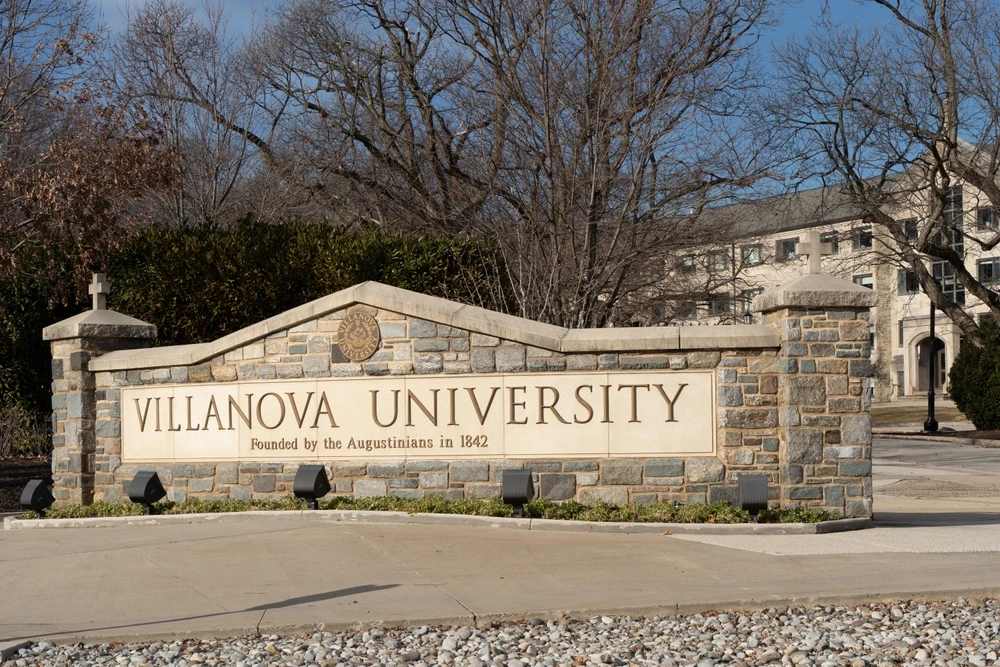
Villanova University, where Robert Prevost, now Pope Leo XIV, studied from 1973-77. | Credit: Amy Lutz/Shutterstock

The conference, themed "Responding to the Cries of the Earth and the Poor," will gather more than 300 academics, church officials, and stakeholders for discussions on integral ecology.

The recipient of the Pope Leo XIV Sustainability Medal may come from any field and will be evaluated based on their efforts to advance sustainability and equity.

Another Villanova initiative to honor Leo XIV

The medal is not the only recent initiative by Villanova University to honor its most famous alumnus.

In July 2026, the university co-sponsored the 38th Annual Liberty Medal ceremony in Philadelphia, which awarded the pope the Liberty Medal ahead of the 250th anniversary of the founding of the United States.

On Nov. 1, the university's basketball team will open its NCAA season in Rome with a men's and women's doubleheader against Notre Dame. The initiative was also inspired by Leo XIV, who will meet both teams in an audience ahead of the games.

Full Article

The pontiff visited the Benedictine Abbey of Montecassino on July 20 from Castel Gandolfo, where he is on vacation.

Pope Leo XIV made a private visit on July 20 to the Abbey of Montecassino, where St. Benedict of Nursia is buried.

As announced by the Holy See Press Office, the pontiff made the trip while on vacation at Castel Gandolfo, where he will remain from July 5-27. At Montecassino, he prayed at the tomb of St. Benedict, considered the father of Western monasticism, "entrusting him with his plea for peace in those regions of the world marked by bloodshed and conflict."

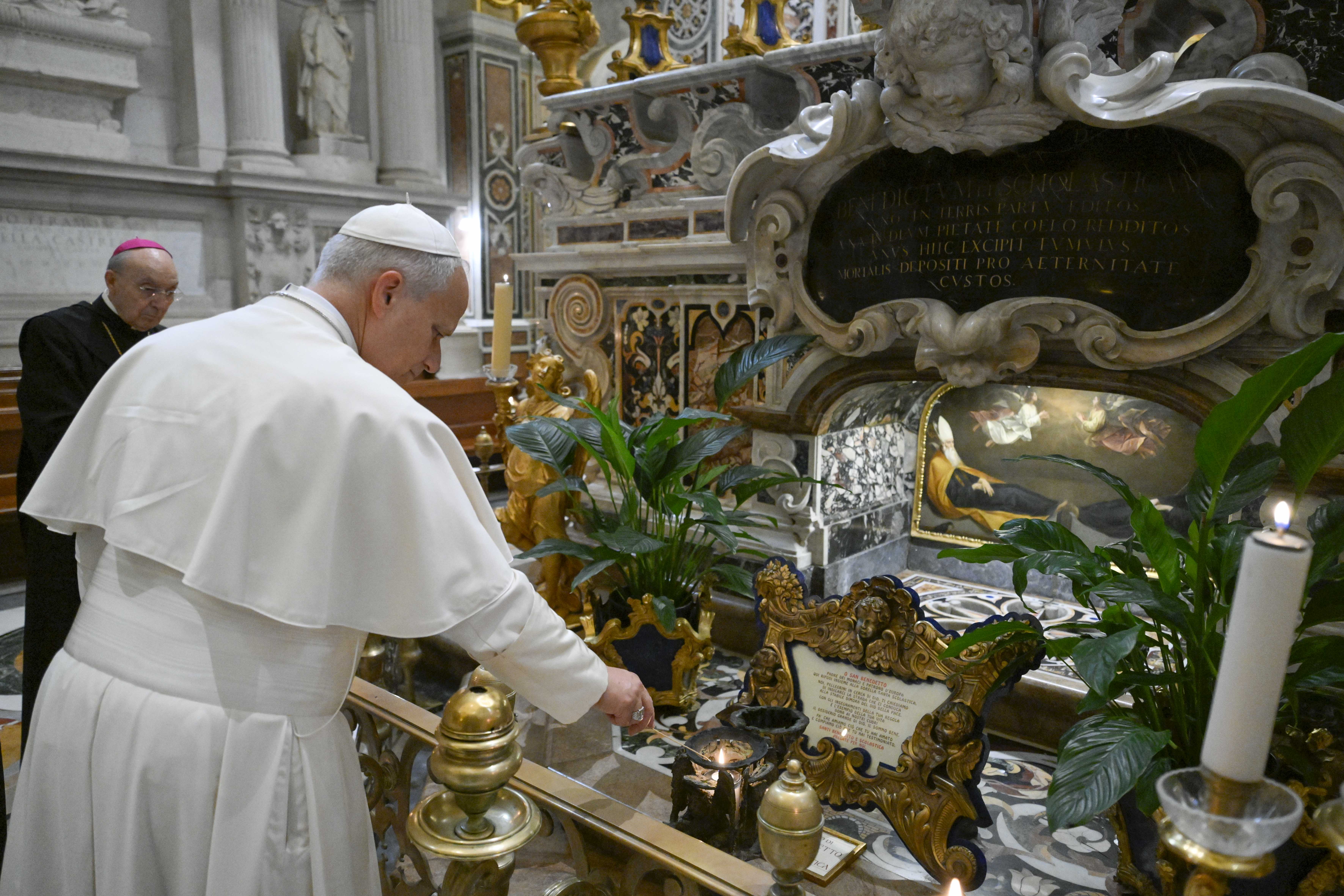
Pope Leo XIV lights a candle at the tomb of St. Benedict of Nursia at the Abbey of Montecassino on July 20, 2026. | Credit: Vatican Media

The pope also enjoyed lunch with the Benedictine community at the abbey.

Leo's surprise visit to Montecassino was his first since his election to the papacy in 2025. While on vacation that year, he also made a surprise visit to the Sanctuary of the Madonna delle Grazie della Mentorella in Guadagnolo, where he also prayed for peace.

The Abbey of Montecassino, founded by St. Benedict in 529 AD, will celebrate the 1,500th anniversary of its founding in 2029.

Leo's visit to Montecassino was also his third public appearance (outside his Sunday Angelus) during his Castel Gandolfo vacation, following his lunch with the poor on July 11 and a summer concert on July 18. Except for his Sunday Angelus, all private and public audiences, including the Wednesday general audience, are suspended during his vacation.

< async src="https://platform.twitter.com/widgets.js" charset="utf-8">

Full Article

For five decades, the Steubenville Youth Conference has helped over a million young people encounter Jesus Christ.

In 1976, Franciscan University of Steubenville held its first youth conference on its campus in Steubenville, Ohio. This summer, the Catholic university celebrates 50 years of a conference that has changed many lives.

Since its founding, the youth conferences have helped over 1 million young people encounter Jesus Christ through dynamic talks, the Mass, Eucharistic adoration, confession, prayer, and fellowship.

The inspiration for the conference for young people came after Father Michael Scanlan, TOR, former president of Franciscan University, held a conference for priests and asked them what the university could do for them. Their response? They wanted some kind of event for young people — specifically teenagers. The next year the first youth conference was held.

"It's really a beautiful testimony to God's faithfulness," Father Dave Pivonka, TOR, current president of Franciscan University, told EWTN News.

"I was thinking the other day that the teenagers that came to the first youth conferences are now in their late 60s, almost 70 years old," he added. "So that's half a century of young people whose hearts have been touched, who have encountered Jesus in the sacraments, who have encountered him in the community gathered of young people … it's just a tremendous milestone for the young people. Now, the fact that Franciscan University has been able to be a part of that and we had the vision to be able to provide this opportunity, I think, is just a great grace for us as well."

This summer, Franciscan University hosted four sold-out conferences on its campus in Steubenville with an additional 15 conferences taking place in cities across the United States.

Youth conference speakers this summer include Father Mike Schmitz, host of "The Bible in a Year" podcast; Chris Stefanick, author, speaker, and television host; Father Leo Patalinghug, author, podcast host, and priest of the Archdiocese of Baltimore; Katie Prejean McGrady, author and Catholic radio host; Paul J. Kim, speaker, author, and musician; and many more.

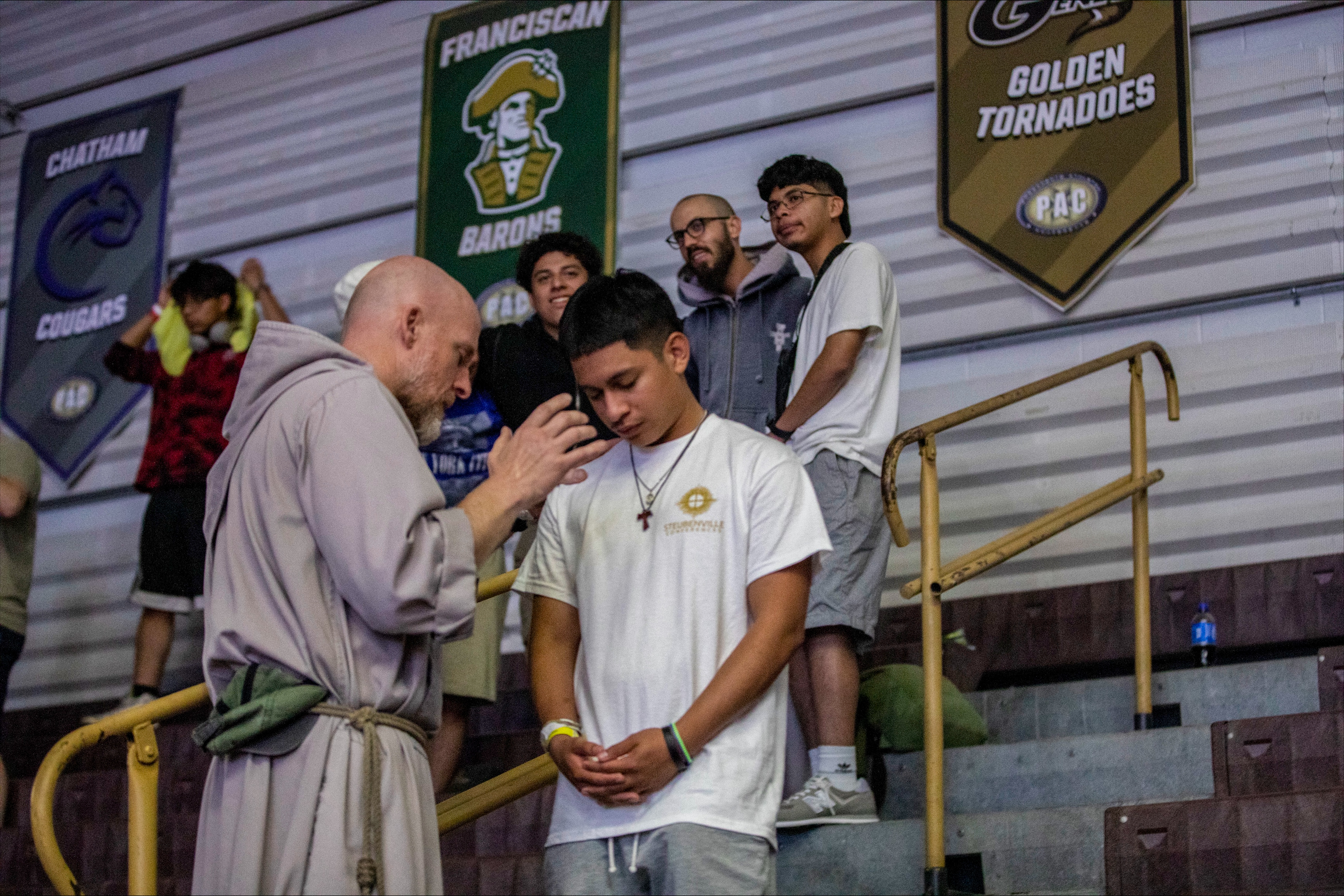
A young man is prayed over by a Franciscan friar at a Steubenville Youth Conference. | Credit: Franciscan University of Steubenville

Brian Kissinger, executive director of conferences at Franciscan University, told EWTN News that "at the heart of our conferences, at the heart of this experience for young people, is the Blessed Sacrament."

He explained that they also try to keep the conferences "as invitational as possible."

"We know teens are coming from a million different places — not just geographically but emotionally, spiritually, catechetically. Some have great formation and loving Catholic homes, others are not Catholic but were just brought there by their Catholic friends," he explained. "So we really try to make the weekend as invitational as possible, to preach the Gospel message, which never changes, but always approaching the presentation of kerygma assuming that a teenager does not know the whole story."

One of the most impactful moments that takes place during the conference, Kissinger said, takes place during the closing Mass when the presiding priest invites young men and women to come forward if they heard during the weekend an invitation from God calling them to the priesthood or religious life.

According to the Center for Applied Research in the Apostolate's (CARA) 2026 survey of newly ordained priests, 18% of priests ordained this year attended a Franciscan University of Steubenville Youth Conference during their vocational journey.

Separate CARA studies found that 21% of women religious and 15% of religious brothers who recently professed perpetual vows also attended a Franciscan youth conference. Combined, 18% of newly professed religious men and women reported participating in a Steubenville Youth Conference — more than any other Catholic conference ministry in the United States.

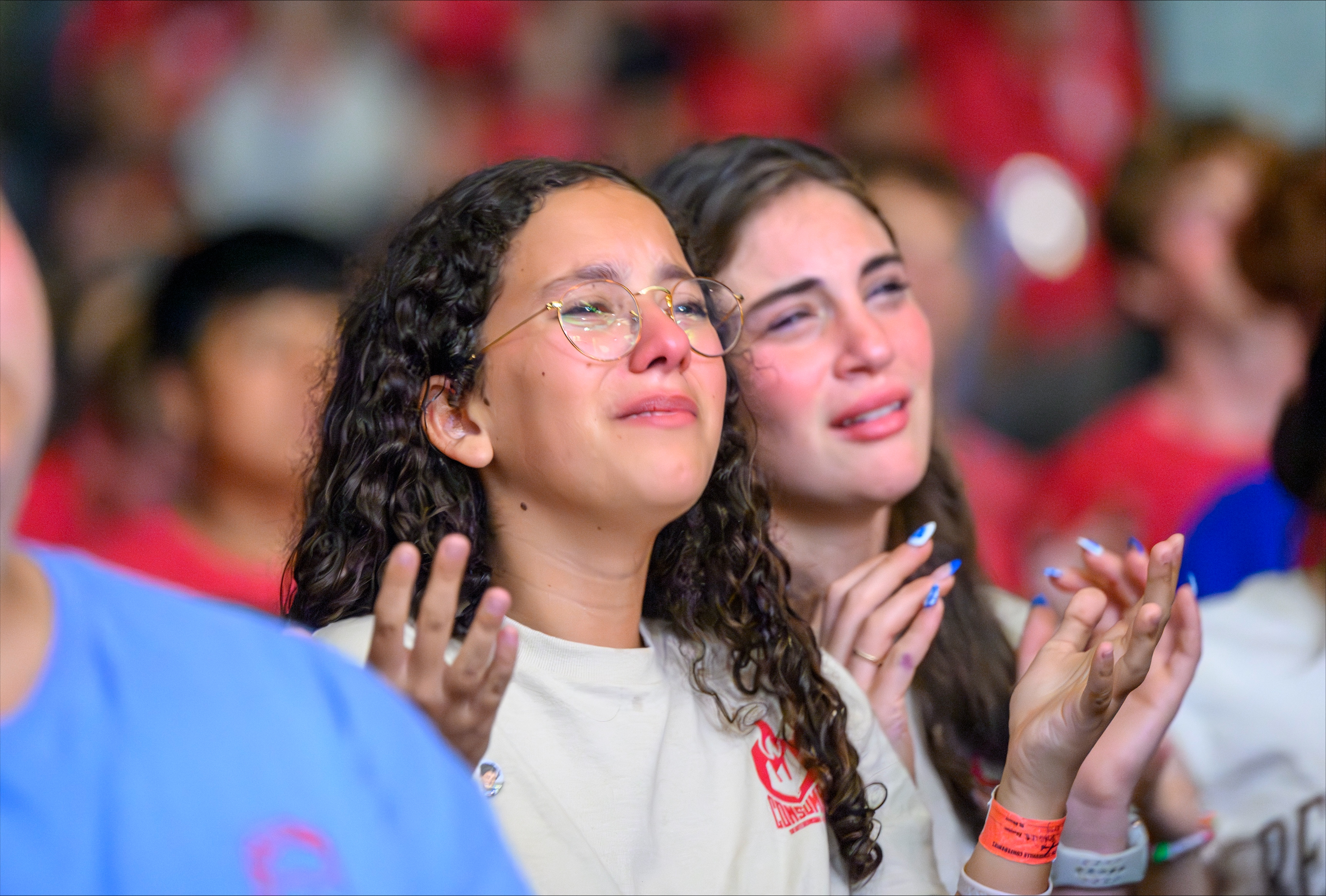
Two young women are visibly emotional during worship at a Steubenville Youth Conference. | Credit: Franciscan University of Steubenville

So what is the secret to the Steubenville Youth Conference's success among young Catholics?

"People will often ask me, 'What's the secret sauce of the conferences?' But honestly, there's nothing complicated about it," Pivonka said. "What we do is we gather young people and we provide an environment where they can encounter Jesus. We do that through the sacraments. We do that through adoration. We do that through the sacrament of reconciliation. We do that through worship. And in the best way that we can, to kind of take down the barriers that might exist between that encounter."

"So, I'd like to say that there's some secret sauce but it's really just providing an environment for encounter for the young people," he added.

"I also don't buy into the whole 'young people aren't zealous or you can't challenge them,'" he continued. "I mean, we present the teachings of the Church without any hesitation. And what we're finding is that young people respond to that."

From reluctant attendee to joyful disciple

Elizabeth Feulner, an 18-year-old student from Syracuse, New York, has attended two Steubenville Youth Conferences.

In an interview with EWTN News, she shared that she was forced to attend the conference her first year. The youth group at her parish was just starting up and her mom received an email from the youth group leader giving her details about the conference.

"My mom was like, 'You're going to this. This sounds like a great opportunity. I wish I'd had this when I was your age.' And I was like, 'Wow, this is very short notice; I don't know if this is going to be my favorite thing.' So it wasn't really my choice the first year," Feulner said.

However, looking back at the first experience, she said it helped her "grow in my personal relationship with Jesus and in more outwardly showing that and being confident in that in a lot of ways in my life."

She pointed out that attending by herself the first year allowed her to "really sit there and feel the presence of Jesus and feel him working in my life," which then motivated her to find relationships "centered in God" when she returned home.

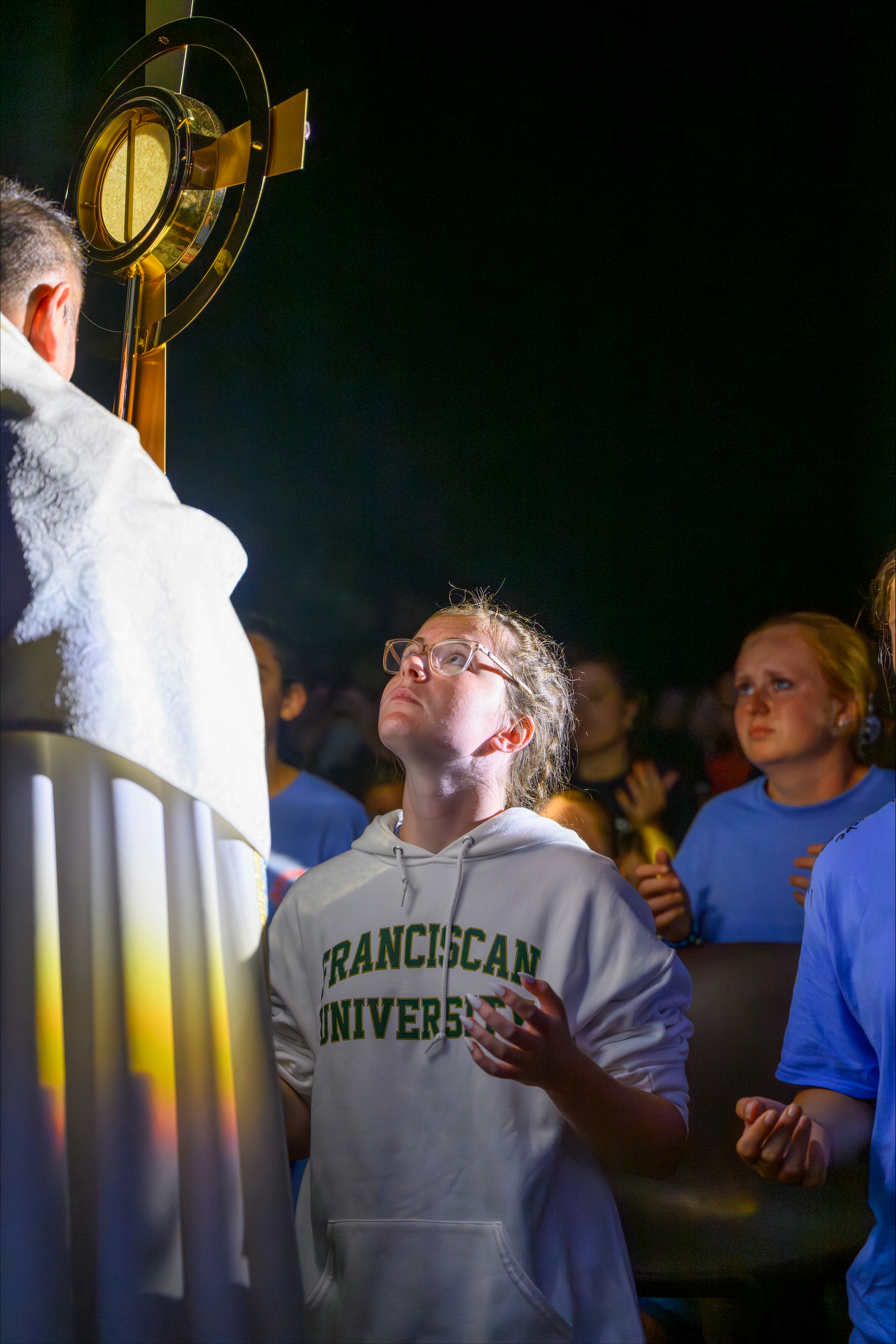
A young woman bows before Jesus in the monstrance during Eucharistic adoration at a Steubenville Youth Conference. | Credit: Franciscan University of Steubenville

Feulner recalled the one moment that impacted her the most during that first conference: Eucharistic adoration.

That year, she attended the conference with a dislocated knee and had to walk with crutches. Adoration took place in the evening but during the day she had walked a lot and was in a lot of pain and was exhausted by the evening.

"I was sitting there during adoration; I was really emotional and the monstrance just stopped right over me and it just felt like for a moment it was just me and God and he was like, 'I see you and I'm here,'" she shared.

"I think that moment has shown me — and I've continued to try and allow it to show me — that he's always there," she added. "And so that physical representation of him being there, looking at me through the monstrance, it's like it's me and him. And that's continued to shape how I view my relationship with God especially through struggle and throughout my life."

When Feulner attended this year, she expressed having a completely different perspective and feeling extremely thankful for all the work God had done in her life since attending the first time the previous year.

Since then her youth group has formed and through that she has received Christ-centered friendships, her boyfriend of two years has now converted to Catholicism, and her younger sister was able to attend the conference with her this year.

"I just felt so thankful for the past year and for the community that I, honestly, never thought I would have as a youth," she said. "This past year has been so fundamental in finally having a community in Christ and in my faith and friendships that are just so unwavering."

Feulner said she hopes that for those who attend a Steubenville Youth Conference that they would have an "experience at some point that showed them that they know that they are worthy of his love, no matter what they've done and that they know that he sees them, whether they had that moment in adoration or not, that he truly sees them every single day and in everything they go through and that he loves them not in spite of that but because of that."

Information about upcoming Steubenville Youth Conferences can be found here.

Full Article

Facebook Twitter Instagram YouTube Soundcloud

Public Inspection File | EEO

© 2015 - 2021 Spirit FM 90.5 - All Rights Reserved.