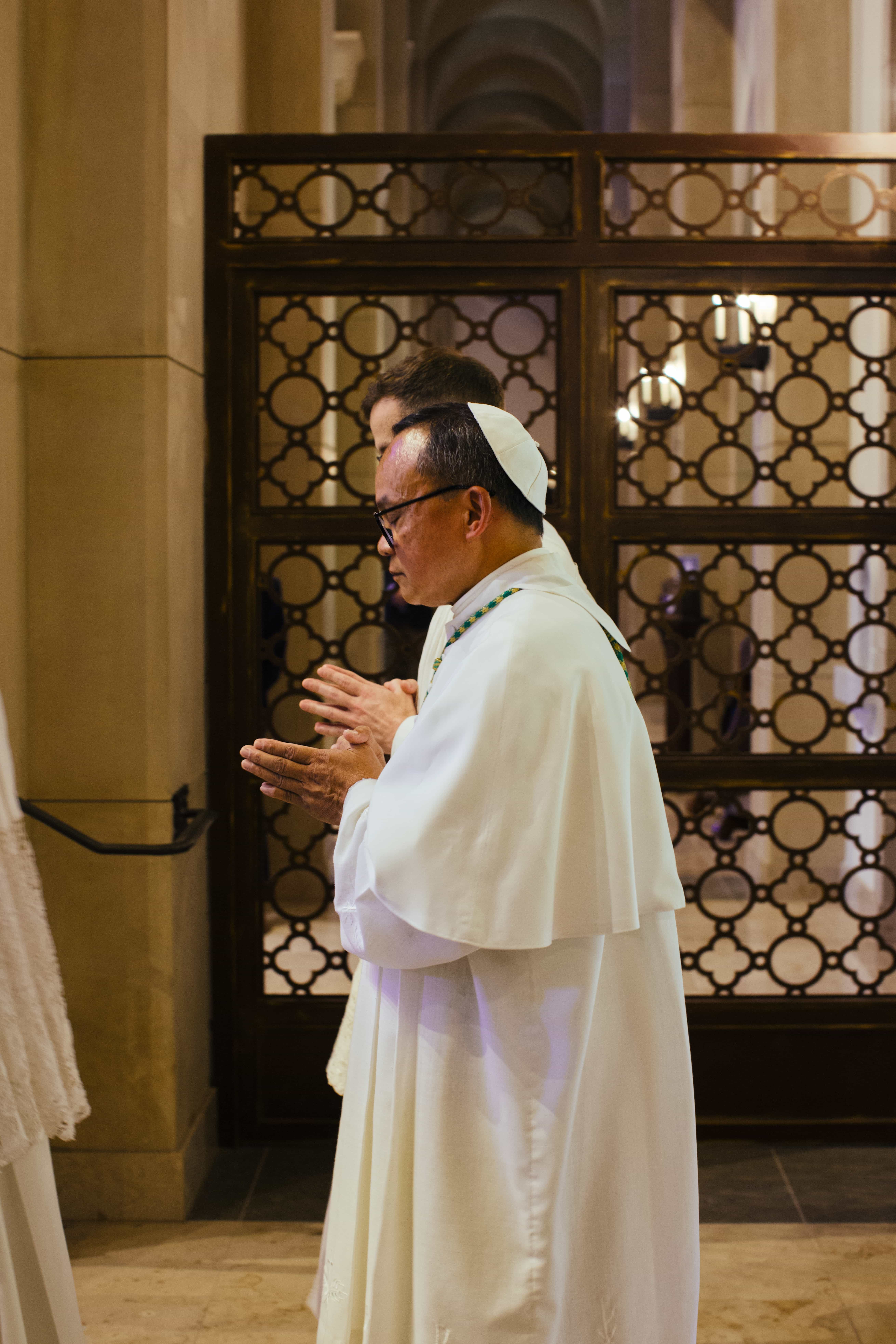
LOS ANGELES — One of the largest Norbertine communities in the world, St. Michael's Abbey in Orange County, California, has elected Father John Caronan as its third abbot since its founding in 1961, succeeding Abbot Eugene Hayes, who led the community for 31 years.
Caronan will serve for a 12-year term, overseeing both the pastoral care and the governance of the community.
"I was certainly surprised that my confreres chose me to fill this important fatherly role," Caronan said. "I know that God's grace will sustain me every step of the way, and I pray that he will help me to be the kind of father that our community desires me to be. Already in the first few weeks since my election, I can see just how much his grace is helping me to undertake this task."
Born Edgar Caronan in Manila, Philippines, in 1964, he immigrated to the United States with his family in 1975 and arrived at St. Michael's Abbey a decade later, making his solemn profession in 1992. He was ordained a priest in 1994.
Caronan is a canon lawyer and spent much of his career working in the marriage tribunals of the Diocese of Orange, in which the abbey is located, and the neighboring Archdiocese of Los Angeles. He has served as the judicial vicar of both the Diocese of Orange and the Maronite Tribunal of the Eparchy of Our Lady of Lebanon. He has also been the regular celebrant of the Tridentine Mass at St. John the Baptist Parish in Costa Mesa, which is staffed by the Norbertine Fathers.
900 years
The Norbertine order was founded 900 years ago by St. Norbert, archbishop of Magdeburg, Germany, and vice chancellor for the Holy Roman Empire. The community's charism, according to St. Michael Abbey's first abbot, Ladislas Parker (1915–2010) in a Diocese of Orange newspaper from 1995 on the occasion of his retirement, is "to combine the contemplative life of a monk with the active life of a parish priest, and to tie this work to community in an abbey."
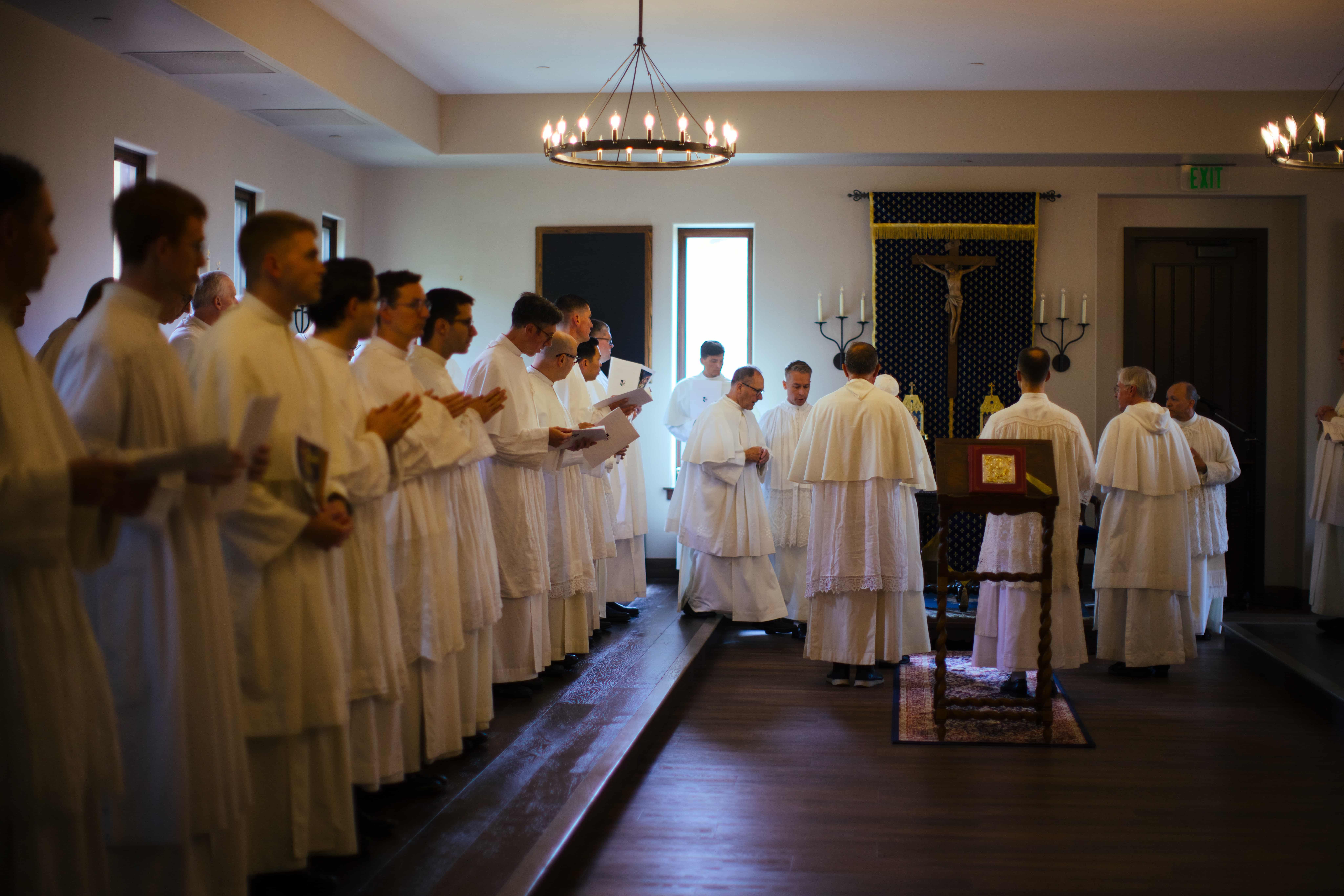
The Norbertines are easily recognized by their traditional white cassock — which, according to pious belief, was given to St. Norbert by the Blessed Virgin Mary as a sign of her protection and favor — and their motto, "Prepared for every good work." The essence or "heartbeat" of the order is fervent devotion to the Eucharist, which is central to Norbertine spirituality, Parker said.
The original members of the community were seven Norbertine priests who fled an oppressive communist government in Hungary in 1950. They made their way to the Archdiocese of Los Angeles in 1957 (the Diocese of Orange would be established in 1976), when Cardinal James McIntyre invited them to teach at Mater Dei High School in Santa Ana.
By 1960, Parker and his fellow Norbertines had collectively earned $46,000 and purchased a remote strip of cattle-grazing land at the base of the Saddleback Mountains. They established St. Michael's Priory, named for the abbey in Csorna, Hungary, and in 1984, Pope John Paul II approved the conferral of abbey status on St. Michael's.
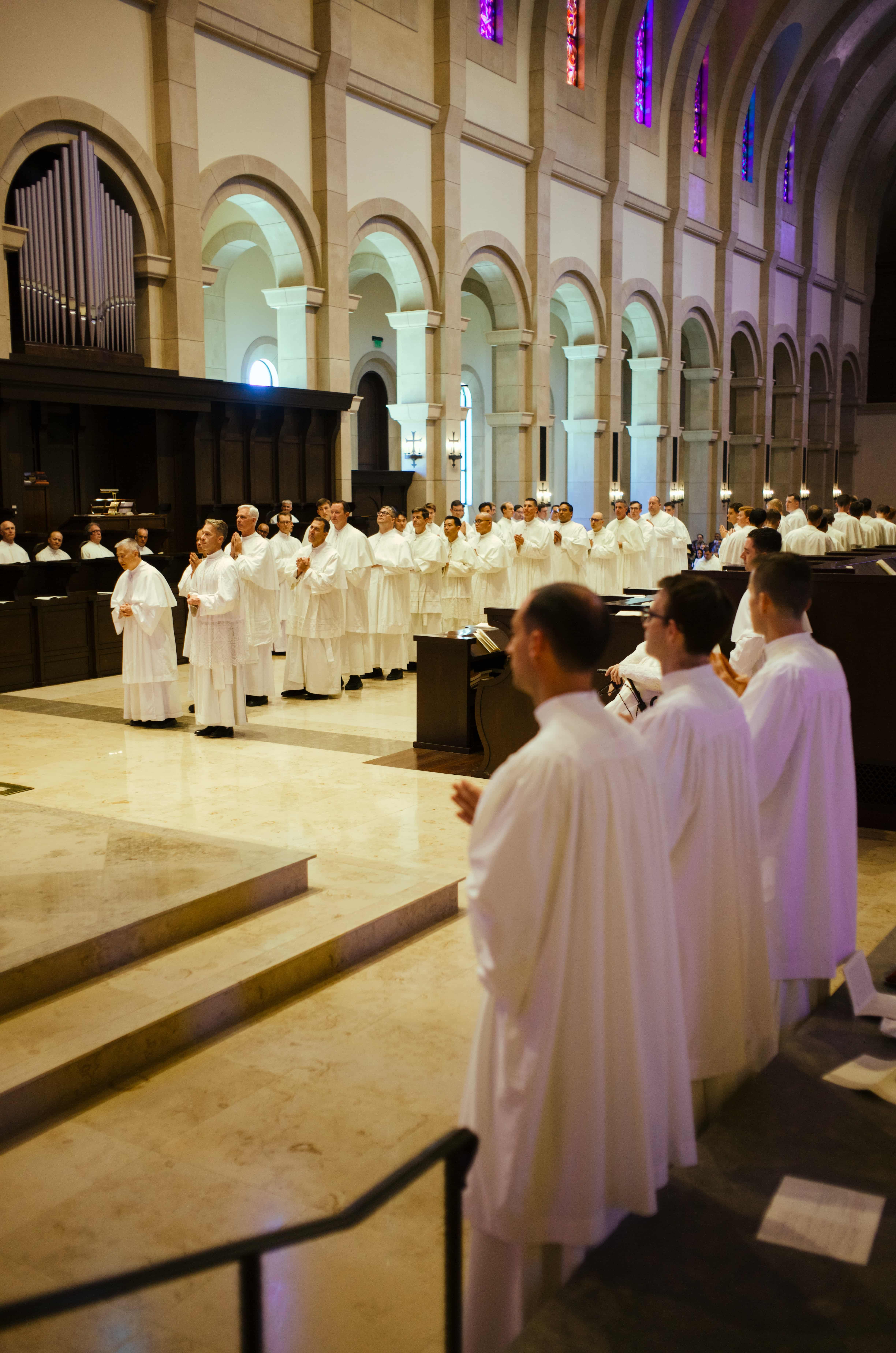
In contrast to many religious communities, St. Michael's Abbey has enjoyed an abundance of vocations, with 68 priests and 32 men currently in formation. The growth necessitated the moving of the community from the former cow pasture to a 320-acre site nine miles away in 2021 with ample space for the community, its apostolates, and future growth.
Today, the community staffs two parishes, St. John's and Sts. Peter and Paul in Wilmington, California; administers a high school in San Pedro, California; operates a local summer camp; staffs the Shrine of Our Lady of Guadalupe in La Crosse, Wisconsin; and staffs Corpus Christi Priory in Springfield, Illinois. Additionally, each Sunday, individual Norbertines assist at more than 30 parishes throughout Southern California.
The order also operates a digital apostolate, The Abbot's Circle, which offers online resources to help viewers grow in their faith as well as provide news about the community.
The election for the new abbot began with a vote on the length of term the abbot would serve; Hayes was elected for life with a mandatory retirement age of 75. This time, the community opted for a 12-year term. Caronan's election followed via secret ballot; he is the first Filipino-born abbot in the history of the community.
"God has blessed our community so wonderfully in the past several decades," Caronan said. "I hope during my tenure as abbot to build upon this solid foundation in such a way that our Norbertine canonical life will flourish spiritually, that our apostolic work in the wider Church will grow, and that through the life and ministry of St. Michael's Abbey, Christ will draw many souls closer to himself."
'Patris Corde'
Caronan selected as his abbatial motto "Patris corde" ("With a father's heart"), reflecting the "fatherly governance and fatherly care" with which he hopes to lead the community, Father Ambrose Criste, director of The Abbot's Circle, shared with EWTN News. "It's representative of the type of man he is."
On Sept. 28, Caronan will receive an abbatial blessing at the abbey during a public ceremony expected to draw many prominent churchmen as well as civic officials.
Like bishops, abbots are prelates with authority over their communities, but unlike bishops they are "blessed" rather than "ordained"; hence they cannot ordain priests.
At the ceremony, Caronan will receive the traditional pontifical insignia of an abbot, including a ring, pectoral cross, miter, and crozier.
St. Michael's Abbey welcomes members of the public to join them daily for prayer as well as for special events, including the abbatial blessing and their celebration of the feast of St. Michael every Sept. 29.