Iraqi Prime Minister Ali Falih al Zaidi has called on Iraqi Christians living abroad to return to their homeland.
During a meeting with Chaldean Patriarch Paul III Nona, the prime minister said the return of Christians who were forced to leave Iraq has become a national priority for his government.
He said the government is ready to provide the support needed to encourage Christian families to return, including making them eligible for the country's 1 million residential land plot initiative.
Al Zaidi said Iraq's strength lies in its ethnic, religious, and cultural diversity and in the unity of its people. He described Christians as "an active and essential component of Iraqi society and a key partner in building the state and shaping Iraq's history and future."
An invitation to invest
The prime minister also encouraged Iraqi Christian business leaders and investors living abroad to return and take part in rebuilding the country by investing in the opportunities available across several sectors, particularly healthcare and education.
He said the government remains committed to strengthening stability and providing the support needed to help their projects succeed, contribute to economic development, and create new jobs.
Nona expressed appreciation for the prime minister's initiatives and his commitment to supporting Iraq's Christian community.
He said the government's position sends an important message encouraging Iraqi Christians in the diaspora to return home, strengthens their confidence in the country's future, and supports the willingness of Christian business leaders and investors to contribute to Iraq's reconstruction and development.
The Church's response
Commenting on the initiative, Syriac Orthodox Archbishop Nicodemus Matti Sharaf of the Archdiocese of Mosul, Kirkuk, and Kurdistan welcomed the prime minister's call for Christians to return.
He described it as "an official recognition of the Christian community's rightful place in the land of its fathers and ancestors."
At the same time, he stressed that addressing the reasons Christians left Iraq in the first place is even more important. Without doing so, he said, the invitation is unlikely to achieve its intended results.
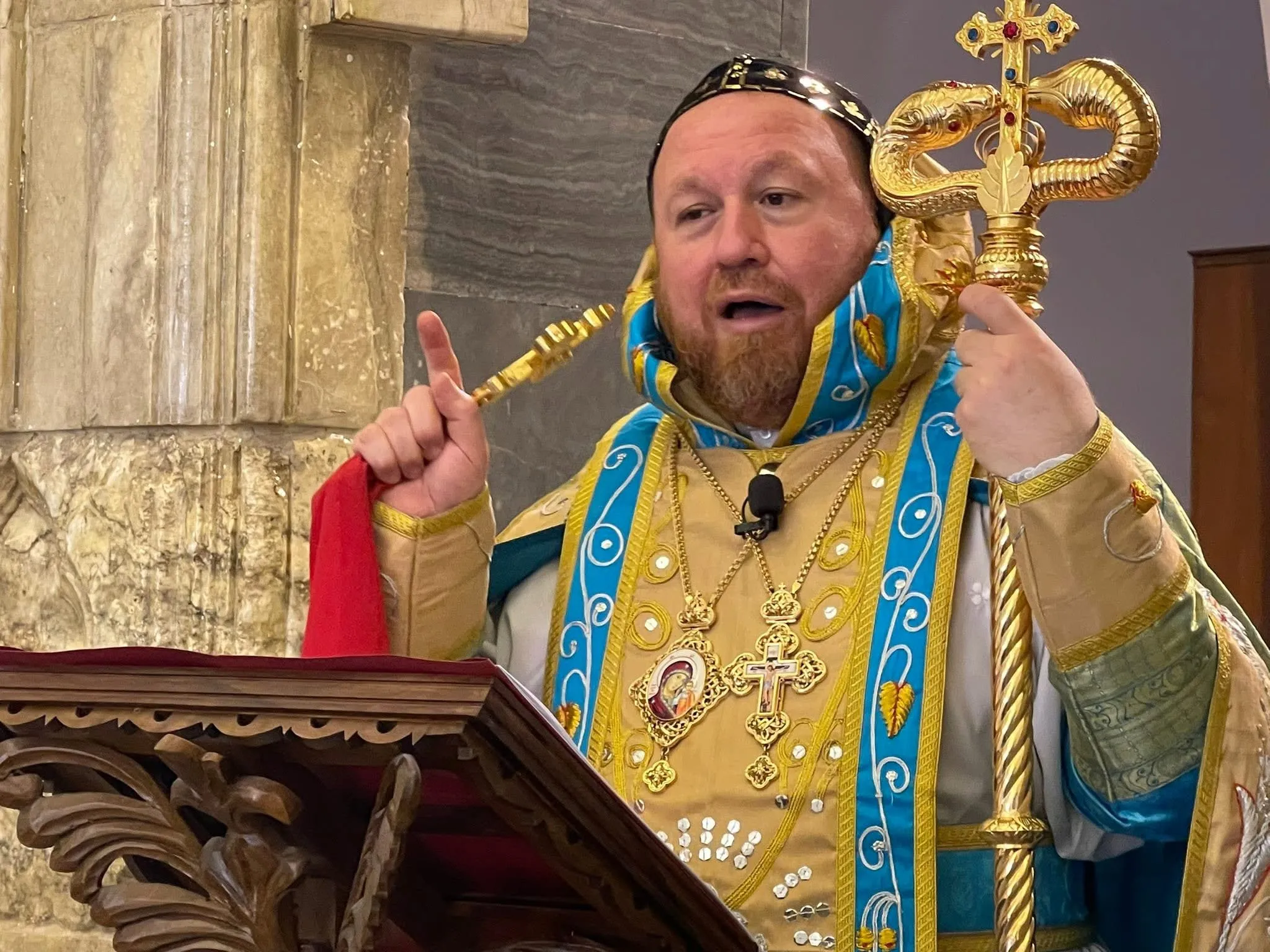
Speaking to an Arabic television channel, Sharaf pointed to several challenges that have contributed to Christian emigration and continue to discourage many from returning.
Among them, he said, are ongoing marginalization and the lack of genuine political representation, noting that Christians still do not have a dedicated electoral register that would allow them to elect their own representatives to Parliament.
He also cited widespread corruption, inadequate infrastructure, limited access to quality healthcare and education, and a shortage of employment opportunities.
These conditions, he said, force many Iraqi Christians abroad to compare what they have found overseas with what remains unavailable at home.
Sharaf expressed hope that the government's campaign against corruption would continue with genuine determination and produce tangible results that restore citizens' confidence.
He described Iraq as "a country floating on a lake of corruption," adding that this alone is "enough to drive any citizen, Christian or otherwise, to leave."
This story was first published by ACI MENA, the Arabic-language sister service of EWTN News, and has been translated and adapted by EWTN News English.