A symbol of Christian heritage and one of the finest examples of Gothic architecture, Notre-Dame Cathedral in Paris, attracts millions of tourists and pilgrims from around the world each year.
The devastating fire that significantly damaged the iconic cathedral on April 15, 2019, led to an unprecedented wave of international solidarity to ensure its restoration.
Although the cathedral reopened for worship in December 2024, restoration work is not yet complete. French authorities recently unveiled a final phase of work to be carried out from 2027 to 2033, which will require a new fundraising campaign aiming to raise 130 million euros ($148.5 million).
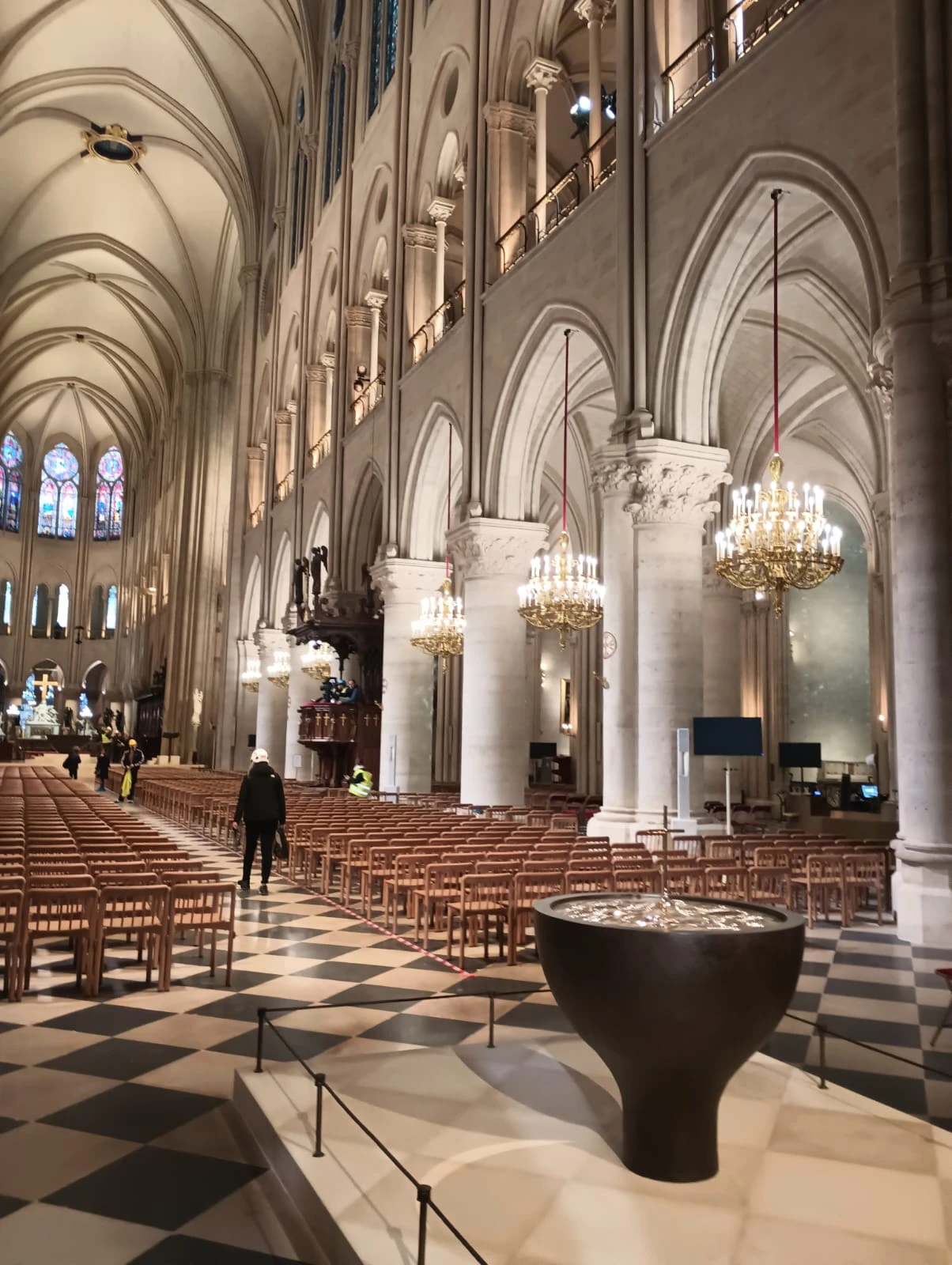
The planned investment amounts to 150 million euros ($171.3 million). Of that sum, nearly 20 million euros ($22.8 million) has already been secured, while the remainder is to come from donations from individuals, companies, and partner organizations, following the funding model used to rebuild the monument after the fire.
"Our goal is to fully complete the cathedral's restoration," stated Philippe Jost, president of Rebâtir Notre-Dame de Paris (Rebuilding Notre Dame in Paris), in an interview with the French Catholic newspaper La Croix.
The program consists of around a dozen projects aimed both at repairing damage done by the fire and at restoring elements of cultural heritage that were already in a fragile state of preservation prior to 2019.
The western rose window: The central focus
The planned works feature the complete restoration of the great western rose window, one of the most iconic examples of European Gothic architecture. This historic 13th-century stained-glass window has not undergone a complete restoration since the work directed by Eugène Viollet-le-Duc in the 19th century.
The plans also include the restoration of the north transept façades, various medieval sculptures, and other architectural elements showing signs of wear. Project leaders believe these works will be crucial for ensuring the cathedral's long-term preservation.
A functioning cathedral, yet still under construction
The reopening of Notre Dame in late 2024 allowed the resumption of the cathedral's ordinary liturgical life. Since then, thousands of the faithful and tourists have once again passed through its doors each day.
However, the fire also made evident conservation issues that had accumulated over decades in a building with more than eight centuries of history. Consequently, the new phase of work aims not only to repair fire damage but also to address broader structural and heritage-related needs.
The reopening ceremony, held in December 2024, was considered one of the most significant cultural and religious events in Europe in recent years.
Furthermore, those responsible for the restoration hope to rekindle the spirit of solidarity that emerged following the 2019 tragedy. At that time, financial pledges totaling nearly 1 billion euros ($1.14 billion) were secured, funds that made the reconstruction possible and left resources for future conservation work.
Debate persists over new stained-glass windows
The unveiling of this final phase does not put an end to one of the most notable controversies surrounding Notre Dame: the proposal, backed by President Emmanuel Macron, to replace six 19th-century stained-glass windows created by Viollet-le-Duc with contemporary works by French artist Claire Tabouret.
The project remains subject to a court ruling following challenges filed by various heritage preservation associations. Their representatives argue that the historic stained-glass windows sustained minimal damage during the fire and consider their replacement unjustified.
The issue has divided restoration experts, public officials, and figures from the world of culture. While some advocate for the complete preservation of the cathedral's historic legacy, others view the proposal as an opportunity to incorporate a new artistic expression into one of France's most recognizable monuments.
This story was first published by ACI Prensa, the Spanish-language sister service of EWTN News. It has been translated and adapted by EWTN News English.