MANILA, Philippines — Amid growing concerns over mental health, Cardinal Jose Advincula, the archbishop of Manila, Philippines, stressed on April 2 that priests must prioritize their mental health to sustain their missionary work.
Celebrating the chrism Mass on Holy Thursday at the Minor Basilica and Metropolitan Cathedral of the Immaculate Conception, commonly known as Manila Cathedral, Advincula quoted a recent study, saying: "About 18% reported that they are psychologically distressed," meaning "almost one in every five priests is undergoing a mental difficulty or emotional burden."
He reminded clergy to acknowledge their human vulnerabilities and weaknesses, calling on the faithful to support clergy through prayer and understanding.
According to data from the Catholic Bishops' Conference of the Philippines (CBCP), as of 2025, there are more than 10,000 priests serving 73.6 million Catholics. The Philippines is Asia's largest Catholic country.
Lay faithful support for the clergy
Advincula urged lay Catholics to stand with priests as they carry out their ministry.
"To be faithful, we need your understanding and your prayers," he said.
Advincula thanked communities for their continued support, despite what he described as the "obvious limitations" of clergy, which include challenges such as limited resources and the need for more active engagement from the laity.
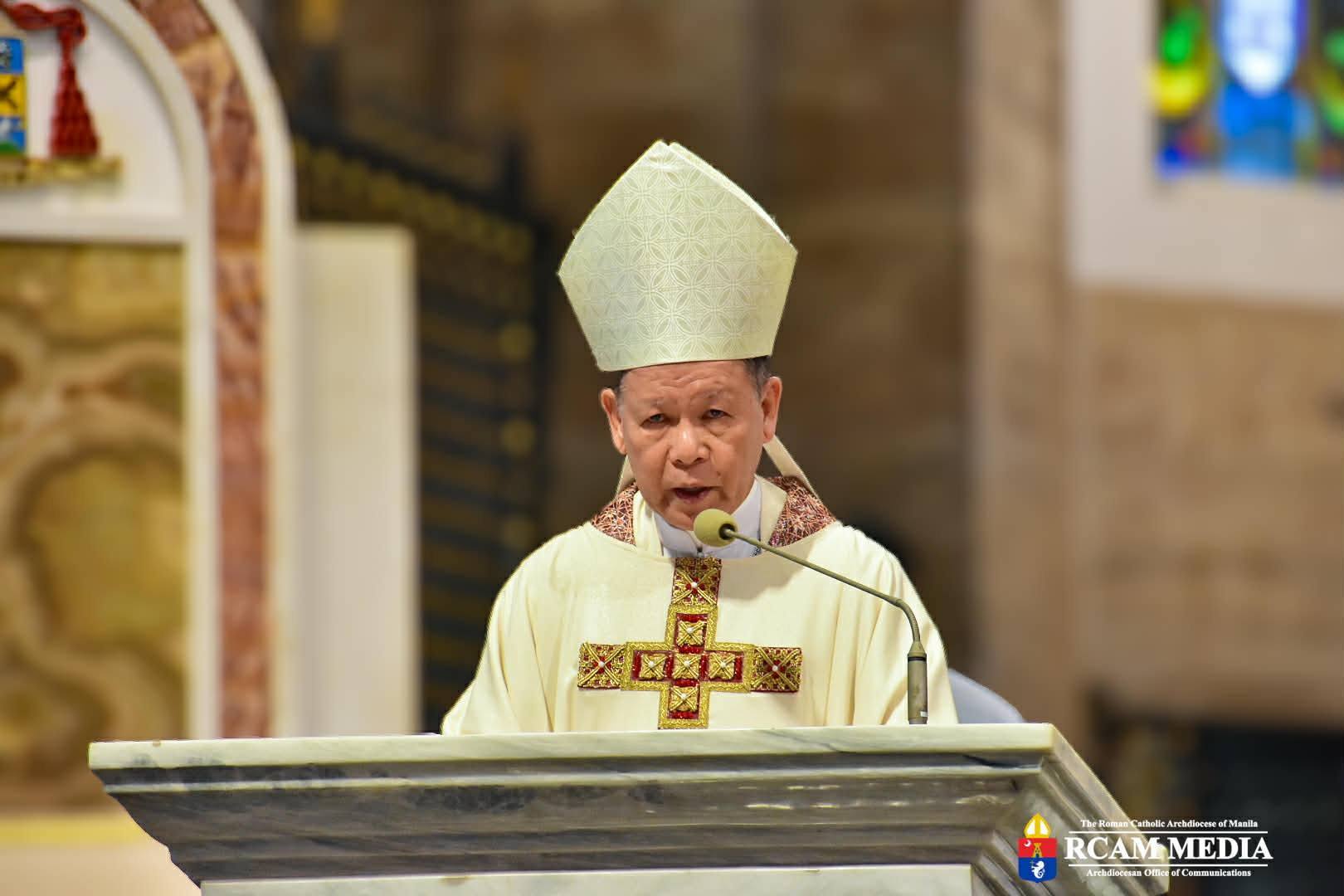
The cardinal thanked priests and the faithful for their shared responsibility in continuing the Church's life and mission.
He said human connections are essential to restoring hope and sustaining missionary work.
Pope Leo XIV's April prayer intention
Advincula's remarks coincided with the Holy Father's April prayer intention, which is "for priests in crisis."
"Let us pray for priests going through moments of crisis in their vocation, that they may find the accompaniment they need and that communities may support them with understanding and prayer," Pope Leo XIV said.
Echoing the pope's words, Advincula urged Catholics to pray for priests, especially those facing loneliness, doubt, and exhaustion.
"When a pastor faces some kind of weariness at any time, the Church is not supposed to judge but rather to walk beside him," he said.
A parish priest's struggle with addiction
EWTN News spoke with two priests who have faced mental health challenges and described how they overcame them.
Father Mark (a pseudonym used to protect his identity), a 52-year-old parish priest in the southern Philippines, serves a parish with more than 40,000 Catholics. He has been there for the last five years.
Over the years, Father Mark felt exhausted by pastoral duties. He gradually developed loneliness and distress, which affected his mental well-being. Over time, he began to consume alcohol more frequently and eventually became addicted.
As his health conditions and addictions affected his personal life and pastoral duty, his religious superiors made him take a break from pastoral care and placed him in a Church-run rehabilitation center near Manila for a year.
After a year of medication along with prayer, social connections, and discernment, he is free of addiction and back to pastoral work in a different parish in the central Philippines.
He said he learned a valuable lesson from his imperfections, especially about balancing personal care — physical, spiritual, and emotional.
A rural missionary's ordeal
Father Marcilino, a 47-year-old priest, used to be a rural missionary in the northern part of the country.
He used to minister to 70,000 Catholics across eight chapels and one parish, alongside two younger priests.
"At some point, I got disinterested in my pastoral work and lost zeal for it," he said.
"I did not have any vices as such. I felt a kind of spiritual dryness in my priestly life," he said.
When his priest companions noticed his mental distress and lack of participation in community prayers and mealtime presence, they encouraged him to take a few months' break from pastoral responsibility with the knowledge of their superiors.
His superiors sent him for a three-month refresher course on psycho-spiritual enrichment.
After spending three months in the program, he returned to the parish with renewed zeal as a person and pastor.
"I have realized that priests like me face pastoral exhaustion or compassion fatigue caused by many factors," he said. "It is necessary that we take precautions and efforts to monitor our mental well-being as we are interested in rendering our pastoral service to others with hope and compassion," he added.
He thanked his superiors and those who continually support him in his missionary endeavors.
"My struggles with mental health issues taught me a valuable lesson that I am not a superhuman being," he said. "I need to be aware of my limitations, especially worry, anxiety, stress, and depression to some extent."
"We are all works in progress and rely on God's grace to carry out our pastoral work for the common good," he said.
Mental health in the Philippines
An estimated 7 million to 12.5 million Filipinos suffer from mental health conditions, according to research published in the Lancet Regional Health.
The National Capital Region Police Office reported on March 25 that suicide cases in Metro Manila more than doubled in the first three months of 2026, with many cases stemming from emotional distress, financial pressure, anxiety, depression, and relationship issues.
Meanwhile, the country does not have adequate mental health professionals, and the government is making efforts to strengthen mental health services, such as increasing funding for mental health programs and training more professionals to meet the growing demand.
Everyone must take care of their mental health amid the many challenges of life and work, Christopher Lim, a professional psychologist, told EWTN News.
Over the years, Lim has counseled several people, including priests and religious sisters, who have faced mental health challenges.
One piece of advice he gives is that anyone can develop mental health concerns at any time, regardless of their current mental well-being.
"Timely professional help is key to mental health," Lim said.